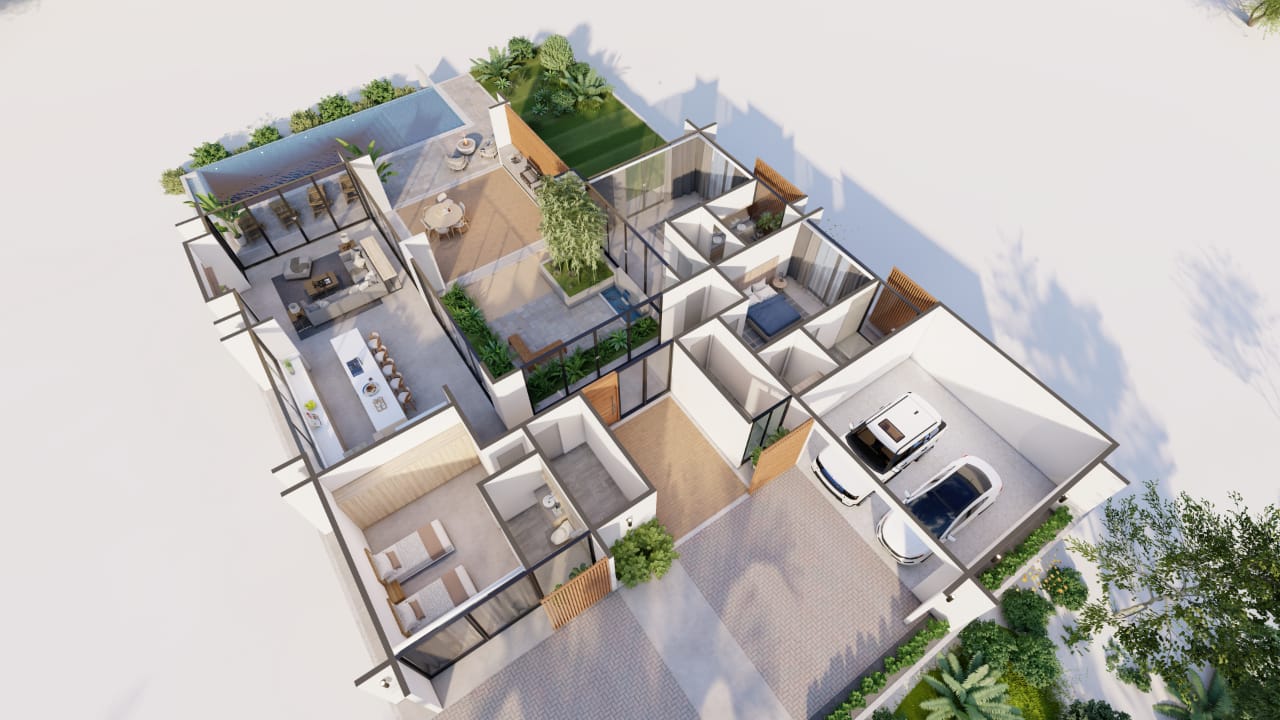

Try buying a half-acre single-family home inside a US golf-and-beach community for $1.3 million.
The closest you will get is a townhome or condo. The equivalent product — a freestanding home on half an acre with private pool, golf-course access, and beach-club access — starts around $2 million in Hilton Head, Naples, or Kiawah. Often higher.
At Reserva Conchal, $1.3 million buys the home.
Then the carrying-cost gap shows up. Costa Rica property taxes are roughly a quarter of US averages. Insurance is materially cheaper. And the HOA at Reserva Conchal — under $500 per month for a Phase II home — covers what you’d otherwise pay separately to half a dozen vendors.
This is the math most buyers do not see until they are already comparing addresses. The HOA fee is what feels expensive in the brochure. The all-in carrying cost is what actually matters when you own the home.
Here is what it costs to own at Reserva Conchal in 2026 — line by line, including utilities, with the assumptions out in the open.
Key takeaways
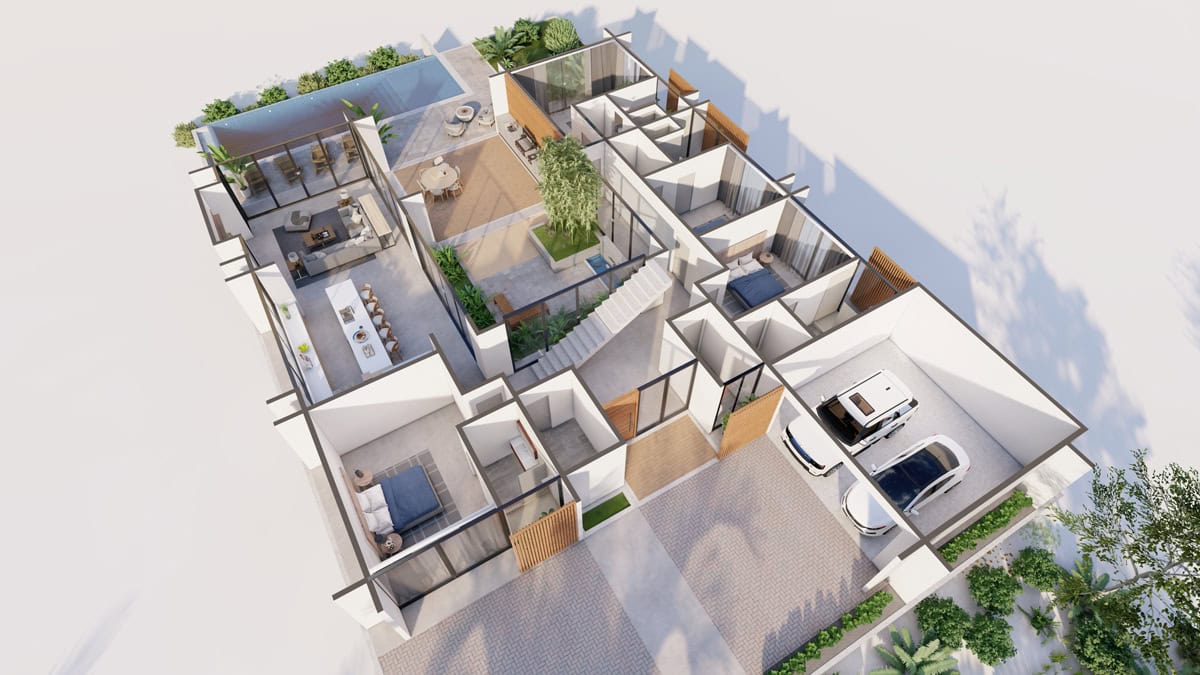
- A Sanara Phase II home is a community home with full beach-club and championship golf access through Reserva Conchal — not a beachfront home. The beach is a 3-minute golf-cart ride from the gate.
- The HOA fee at Reserva Conchal is under $500 per month for a Phase II home — and it replaces costs you would otherwise pay separately to security, landscaping, common-area insurance, and amenity vendors.
- Costa Rica property tax is approximately 0.25% of declared value per year — among the lowest rates in the Americas.
- Costa Rica’s luxury home solidarity tax adds a sliding-scale charge for homes above a set threshold — meaningful but small as a share of total cost.
- All-in annual carrying cost (HOA + property tax + luxury tax + insurance + maintenance + utilities) for a $1.3M Sanara Phase II home is approximately $24,000 to $30,000.
- A truly comparable US product — half-acre single-family home, gated community, golf course on site, beach-club access — does not really exist at $1.3M. The closest equivalents start near $2M and carry annual costs of $40,000 to $80,000.
What does the Reserva Conchal HOA fee include?
The HOA fee at Reserva Conchal looks like a luxury number until you read what it covers. Then it starts looking like a bundle invoice.
Inside that monthly figure:
- 24/7 manned security at the gate. A standalone home security service in the US runs $50 to $300 a month.
- Common-area insurance. Roads, landscaping, infrastructure, gated entry — covered at the community level.
- Landscaping and grounds. Roadways, vegetation corridors, native plantings, the trail network, and shared green space.
- Pool and amenity maintenance for community pools, the Hub, splash park, and shared facilities inside Sanara.
- Building repairs and long-term reserves funded at the community level.
- Access to Reserva Conchal amenities through the beach club membership — Playa Conchal pools, restaurants, bars, gym, co-working space, bikes, paddleboards, surfboards, kayaks.
- Audubon-certified Robert Trent Jones II golf course access through community membership pathways.
- Professional property administration.
In a US single-family beach community, those line items get paid separately. Each one comes with its own vendor, its own invoice, and its own annual increase.
Not just an HOA. A bundle of costs you would otherwise pay piecemeal.
How much are Costa Rica property taxes for foreigners?
This is the number most US buyers don’t believe at first.
Costa Rica property tax is approximately 0.25% of declared value annually. For a $1.3M Phase II Sanara home, that’s about $3,250 a year.
For comparison, the same $1.3M home in a US community would owe (per the Tax Foundation’s state property tax data):
- South Carolina (Hilton Head, ~0.5%): about $6,500
- Florida (Naples, statewide avg ~0.9%): about $11,700
- California (Prop 13 ~1.1%): about $14,300
- Texas (~1.6 to 2.5%): $20,800 to $32,500
You can read more about how Costa Rica’s property system works on the Ministerio de Hacienda’s tax page — the rate has been stable for over a decade.
There is also a one-time property transfer tax of 1.5% at closing, paid by the buyer in most transactions. That’s $19,500 on a $1.3M home — meaningful at closing, but a one-time event, not an annual carrying cost.
Foreign buyers pay the same rate as Costa Rican nationals. There is no foreigner surcharge.
Does Costa Rica’s luxury home tax apply to my Sanara home?
Yes. And it is the line item most US buyers have not heard of before they start shopping.
Costa Rica applies a solidarity tax on luxury homes (Impuesto Solidario para el Fortalecimiento de Programas de Vivienda) above a value threshold that adjusts annually. The 2026 threshold is approximately $214,000 in construction value — meaning the building, not the land.
The rate is sliding by tier, starting around 0.25% and capping at roughly 0.55% for the highest brackets.
For a Phase II Sanara home, expect this tax to add $3,000 to $5,000 per year, depending on the home’s construction-value tier. Sanara’s sales team can give you the exact figure for any specific model.
This tax was created to fund affordable housing programs nationally. It’s a real cost. It also funds a public good. Most buyers we talk to are fine with it once it’s explained.
Confirm the current threshold and rates with your Costa Rican attorney at the closing — they’re updated annually.
What does home insurance cost in Costa Rica?
Lower than you expect. By a lot.
Costa Rica is not in the Atlantic hurricane corridor. The Guanacaste coast has not been hit by a major hurricane in modern record-keeping. Wildfire risk is low. Earthquake coverage is available and reasonably priced.
For a $1.3M Phase II Sanara home, expect $2,000 to $3,500 per year for comprehensive homeowners’ insurance with umbrella coverage. Multiple carriers compete in the Costa Rican market.
A comparable US community home at the same value tells a different story. Florida insurance has become one of the largest cost-of-ownership line items in the country — $6,000 to $12,000 a year is common in Naples-area communities, and coastal Florida policies often exceed $15,000 once wind and flood are layered on. Hilton Head and other Carolina coastal communities run $4,000 to $8,000. California coastal homes run $4,000 to $10,000, with premiums climbing as wildfire-risk reassessment continues. (The Insurance Information Institute publishes state-by-state averages and confirms why coastal and golf-community US premiums have been rising.)
This single line item is one of the biggest reasons total carrying cost diverges between Costa Rica and the US coastal markets.
What should I budget for home maintenance?
The HOA covers the community. The home itself is yours to maintain.
For a Phase II Sanara home, plan for $4,000 to $7,000 per year across:
- Private pool maintenance (weekly service)
- Garden and landscape upkeep on your half-acre lot
- A/C servicing on the inverter system
- Exterior paint and weather protection (every 5 to 7 years, amortized)
- Reserve fund for major systems
Two things make this number lower than it sounds. First, the homes are designed for the climate — cross-ventilation, deep overhangs, native landscaping, and proper drainage. The Phase II construction approach reduces maintenance demand, not eliminates it. Second, local labor for routine maintenance is significantly cheaper than its US equivalent.
The honest version: imported materials cost 30% to 50% more than they would in the US. Anything you have to special-order will sting. Anything you can source locally will surprise you on the low side.
Buy local where you can. Import only when you must.
What about utilities — electric, water, and internet?
This is the line buyers forget on both sides of the comparison. It matters.
For a Phase II Sanara home, expect roughly $4,000 to $6,000 per year all-in:
- Electric: $200 to $400 per month depending on A/C usage and whether the home has solar. Sanara’s passive-design approach (cross-ventilation, deep overhangs, inverter A/C, high-E windows) keeps demand lower than a comparable US home in a hot climate. Optional solar drops this further.
- Water: $50 to $100 per month. Reserva Conchal has reliable municipal-grade water. Many Sanara homes also have water-catchment systems, reducing potable-water demand for irrigation.
- Internet: $50 to $100 per month for fiber. Costa Rica’s fiber buildout in the Gold Coast resort areas is genuinely good — many remote workers run two simultaneous video calls without issue.
- Garbage and basic services: typically covered by HOA or municipal services.
A comparable US golf-and-beach community home runs noticeably higher on this line. Florida communities pay $400 to $800 a month for electric alone in a year-round-A/C environment, plus higher water rates in drought-affected areas. Annual utilities of $7,000 to $10,000 are normal in Naples or Bonita Springs. Carolina coastal communities run somewhat lower but rarely below $5,000.
The Sanara utility line is not zero. It is just structurally lower.
What’s the total annual carrying cost for a Sanara Phase II home?
Here is the full math, conservative numbers, on a representative $1.3M Phase II home — every line item, including utilities:
| Line item | Annual cost |
|---|---|
| HOA (under $500/month) | $5,400 |
| Costa Rica property tax (0.25%) | $3,250 |
| Luxury home solidarity tax (sliding) | $3,500 to $5,000 |
| Homeowners insurance | $2,500 |
| Home maintenance + reserves | $4,500 |
| Utilities (electric, water, internet) | $5,000 |
| All-in annual carrying cost | $24,150 to $25,650 |
Round numbers, in the $24,000 to $30,000 range, depending on the specific Phase II model, your usage profile, and how you maintain the home.
That’s the math. Now the comparison.
How does this compare to comparable US golf-and-beach communities?
The first thing to acknowledge: $1.3 million does not buy the same product in the US.
Reserva Conchal is a gated, master-planned, 2,300-acre community with an Audubon-certified Robert Trent Jones II golf course, a beach club at Playa Conchal, two on-site hotels (Westin and W), 14 restaurants, two spas, 19.4 km of trails, and 24/7 security. Sanara homes sit on half-acre lots inside that community. The closest US equivalents — Hilton Head Sea Pines, Kiawah Island, Naples (Tiburón, Bonita Bay, Quail West), Palmetto Bluff — are roughly comparable in product class.
At $1.3M in those communities, you are shopping townhomes and small condos. The half-acre single-family home with private pool is a different price band. Equivalents typically start around $2 million and run well higher.
The carrying-cost picture, all-in, with utilities included, looks like this:
| Market | Property tax | HOA / fees | Insurance | Maintenance | Utilities | All-in annual |
|---|---|---|---|---|---|---|
| Reserva Conchal, Costa Rica ($1.3M home) | $3,250 | $5,400 | $2,500 | $4,500 | $5,000 | ~$24K to $30K (incl. luxury tax) |
| Hilton Head Sea Pines, SC (~$2M equivalent) | $10,000 | $5,000 to $10,000 | $5,000 to $9,000 | $6,000 to $9,000 | $5,000 to $7,000 | $31,000 to $45,000 |
| Naples / Bonita Bay, FL (~$2M to $3M equivalent) | $18,000 to $27,000 | $12,000 to $24,000 | $8,000 to $15,000 | $6,000 to $10,000 | $7,000 to $10,000 | $51,000 to $86,000 |
| Kiawah Island, SC (~$2M to $3M equivalent) | $10,000 to $15,000 | $8,000 to $15,000 | $5,000 to $9,000 | $6,000 to $10,000 | $5,000 to $7,000 | $34,000 to $56,000 |
| PGA West, La Quinta, CA (golf only, ~$1.5M equivalent) | $16,500 | $4,800 to $9,600 | $3,000 to $5,000 | $5,000 to $8,000 | $4,000 to $6,000 | $33,000 to $45,000 |
Two stories in one table.
First, you cannot buy the equivalent product class in the US for $1.3 million. The asking price is meaningfully higher.
Second, even at that higher asking price, the annual carrying cost is materially higher than Reserva Conchal — driven by US property taxes, US community HOA fees, US insurance (especially Florida), and US utility loads.
That’s not “cheaper.” That’s a different product accessible at a price point that does not exist in the US market.
More of your investment stays compounding. Less of it leaks out every year just to hold the asset.
Can I offset carrying cost with rental income?
Yes — and most owners do, at least partially.
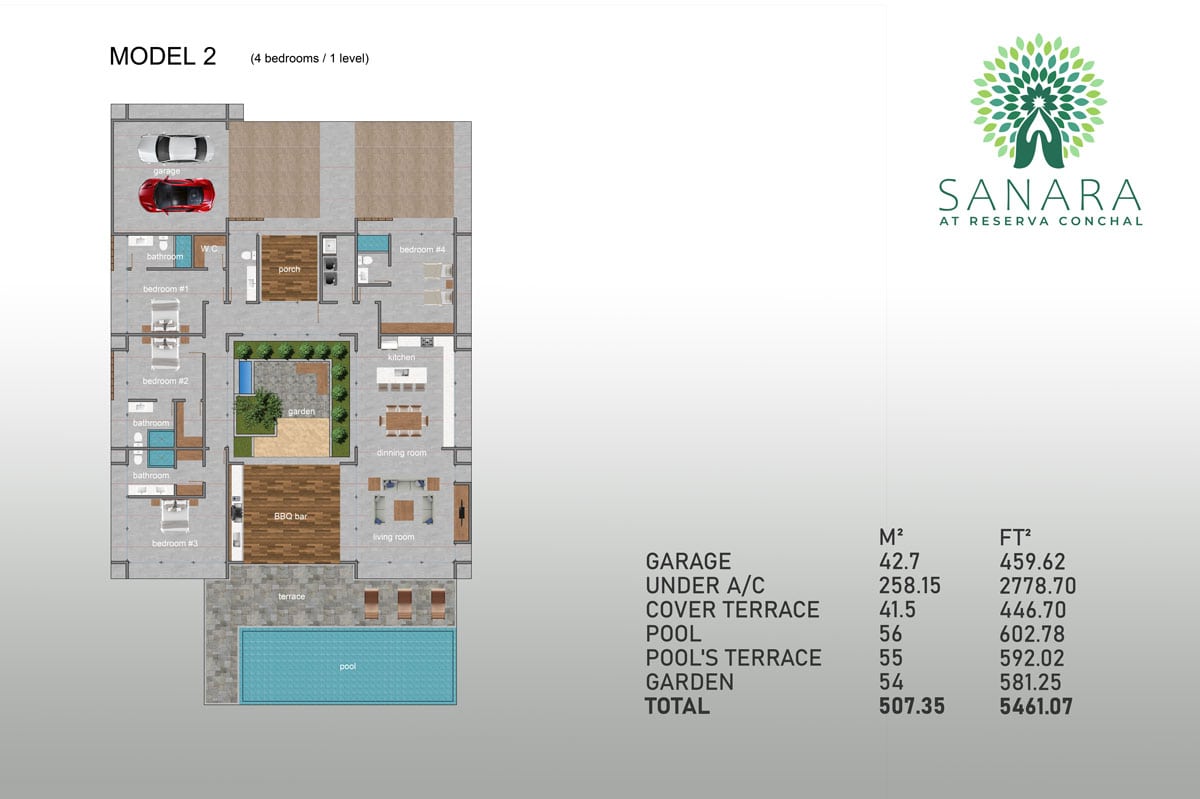
Reserva Conchal has an established rental market in both long-term and short-term segments. The 4 to 6 bedroom inventory at Sanara fits a segment with limited supply: families and groups who need space and privacy and are willing to pay for both.
Realistic rental performance:
- 5% to 6% annual returns are achievable when the home is managed properly.
- Performance depends on your usage, seasonality, management quality, and pricing.
- Costa Rica is seasonal. Evaluate annually, not monthly.
- Rentals here are not passive. They require a professional manager, an honest maintenance budget, and realistic expectations about cleaning turnover, guest communication, and shoulder-season pricing.
For a $1.3M home, even a conservative rental program at 4% gross of value yields about $52,000 a year in revenue. After management fees, cleaning, taxes, and reserves, net rental income often covers full annual carrying cost plus a margin.
This is not a hands-off cash machine. It is a real business that pays the cost of owning the home, if you treat it like one.
If you’d rather use the home personally and not rent, the carrying cost is still meaningfully lower than equivalent US community homes — just without the rental offset. Most Sanara buyers fall somewhere in the middle: personal use for two to four months, rental coverage for the rest of the year. See our full FAQ on rentals and ownership for the longer answer.
What this means for a real buying decision
The HOA at Reserva Conchal is under $500 a month.
That number is true in isolation. It is also incomplete. The honest comparison is not “what does the HOA cost?” The honest comparison is “what does it cost me to own this home, all-in, every year — and what am I getting for it?”
A Sanara Phase II home at $1.1M to $1.5M sits inside a fully operating, 30-year-established, 2,300-acre Audubon-certified community with championship golf, a beach club at one of the world’s top-ranked beaches, two on-site hotels, 14 restaurants, two spas, 24/7 security, and a top international school within walking distance of the gate.
Try shopping for that product at $1.3 million in the United States. The equivalents start around $2 million. And at that higher purchase price, the annual carrying cost is still materially higher than Reserva Conchal — driven by US property taxes, insurance, and utility loads that have only been rising.
Phase One at Sanara sold out and is delivered. You can tour the homes. You can walk the trails. You can sit at the beach club. The community is operating. The math is what it is.
When the HOA covers what you would otherwise pay separately — and the all-in carrying cost still ends up well below comparable US golf-and-beach communities — is the HOA still the right place to focus your concern?
If you want the exact carrying-cost number for a specific Phase II floor plan, request current Phase II pricing and availability — the sales team will run the math on the model you’re considering.
Frequently asked questions
How much is the HOA at Reserva Conchal for a Sanara home?
Under $500 per month for a Phase II home. The fee covers community security, common-area insurance, landscaping, shared amenity maintenance, and access to Reserva Conchal beach club, golf, and resort facilities through the membership structure.
What is the property tax rate in Costa Rica?
Approximately 0.25% of declared value annually. Foreign buyers pay the same rate as Costa Rican nationals. There is also a one-time 1.5% property transfer tax paid at closing.
Does the Costa Rica luxury home tax apply to Sanara homes?
Yes. Sanara Phase II homes exceed the construction-value threshold (approximately $214,000 in 2026). Expect $3,000 to $5,000 per year on a sliding scale, capping near 0.55% in the highest brackets.
How much is homeowners insurance in Costa Rica?
Expect $2,000 to $3,500 per year for a $1.3M Sanara home. Costa Rica is outside the Atlantic hurricane corridor and has low wildfire risk, which keeps premiums materially lower than US Atlantic, Gulf, or California coast equivalents.
What is the total carrying cost for a Sanara Phase II home?
Approximately $24,000 to $30,000 per year all-in for a representative $1.3M home, including HOA, property tax, luxury home tax, insurance, maintenance reserves, and utilities (electric, water, internet).
Can rental income cover Sanara’s carrying cost?
For most owners, yes. Realistic returns are 5% to 6% annual when the home is professionally managed. Net rental income often covers full annual carrying cost plus margin for owners who rent during shoulder seasons and use the home personally during peak.
Are Sanara homes beachfront?
No. Sanara homes sit on half-acre lots inside Reserva Conchal, a 2,300-acre master community in Guanacaste. The beach club at Playa Conchal is a 3-minute golf-cart ride from the gate. Owners get full beach-club access without the carrying cost (or insurance premium) of true beachfront ownership.
How does Sanara’s carrying cost compare to a US golf-and-beach community home?
A truly comparable US product — half-acre single-family home, gated community, on-site golf, beach access — does not really exist at $1.3M. The closest equivalents in Hilton Head, Naples, or Kiawah start around $2M. At that higher purchase price, US all-in carrying cost typically runs $40,000 to $80,000+ per year versus $24,000 to $30,000 at Reserva Conchal, driven by US property taxes, insurance, and utilities.